Your Duncan dentist sees how new dental technologies improve healing and long-term oral health. One of the most exciting developments today is regenerative dentistry. This field focuses on helping the body repair and regrow damaged dental tissues instead of simply replacing them.
Patients are hearing this term more often, but many still wonder what it truly means. If you want to learn more about regenerative dentistry, call (580) 255-4880 to book a consultation with Dr. Matthew Bridges at Chisholm Trail Smile Center in Duncan, OK.
What Is Regenerative Dentistry?
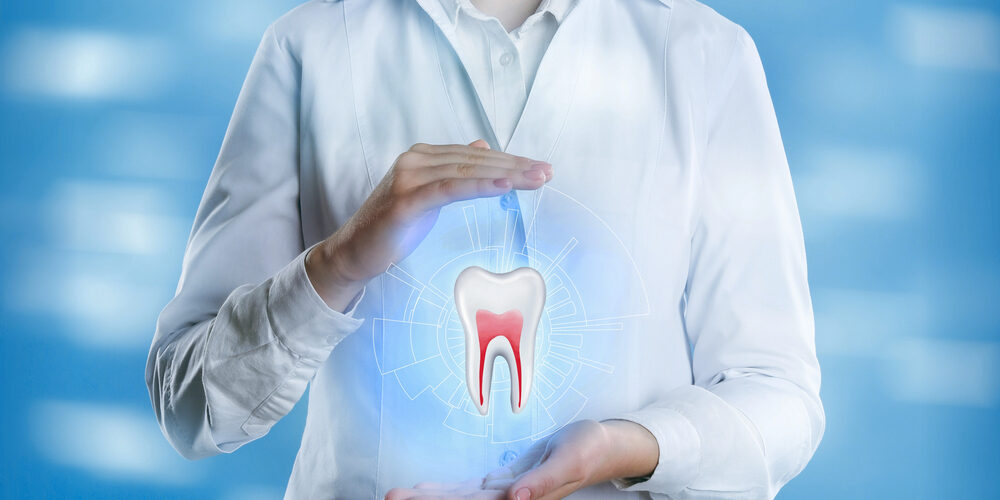
Regenerative dentistry is a branch of dental science that uses biological methods to restore tissues lost to decay, disease, or trauma. These tissues include bone, enamel, gum tissue, dental pulp, and supporting ligaments.
Instead of relying only on fillings, crowns, or implants, regenerative dentistry encourages the body’s natural healing abilities. Therefore, your Duncan dentist may describe regenerative dentistry as a shift from repair to renewal. The goal is to restore living tissue that functions like the original structure.
How Regenerative Dentistry Differs From Traditional Care
Traditional dentistry focuses on restoring function using artificial materials. For instance, fillings repair cavities, crowns protect weakened teeth, and implants replace missing teeth. These treatments work well but do not regrow tissue.
Regenerative dentistry works at the biological level. Your Duncan dentist may explain that it uses stem cells, growth factors, and scaffolds to stimulate new tissue formation. This approach supports natural healing rather than substitution.
The Science Behind Regeneration
Regenerative dentistry relies on several key biological tools.
Stem Cells
Stem cells can develop into specialized tissues like bone or connective tissue. Dental pulp stem cells, found inside teeth, show promise for regenerating pulp and dentin.
Recent scholarly reviews show that regenerative endodontic procedures can lead to the formation of pulp-like tissue with blood vessels. This confirms that regeneration can produce living, functional tissue.
Growth Factors
Growth factors are proteins that signal cells to grow and divide. They guide the regeneration process by attracting cells to damaged areas and directing tissue development.
Scaffolds
Scaffolds are biocompatible frameworks that support cell growth. They dissolve over time as new tissue forms, leaving behind natural structures.
Current Uses of Regenerative Dentistry
Your Duncan dentist may recommend regenerative dentistry in several situations.
Periodontal Regeneration
Advanced gum disease can destroy bone and connective tissue. Research shows that regenerative periodontal therapy may rebuild these structures and improve tooth stability.
Bone Regeneration for Implants
Some patients lack enough jawbone for implants. Regenerative techniques can stimulate new bone growth before implant placement.
Regenerative Endodontics
Instead of removing infected pulp and sealing the tooth, regenerative endodontics encourages new tissue growth inside the tooth. This approach may improve tooth strength and longevity.
Benefits for Patients
Regenerative dentistry offers several advantages.
Natural Healing
By restoring living tissue, regenerative dentistry supports natural function and structure.
Long-Term Stability
Regenerated tissues may integrate better with surrounding structures than artificial materials.
Reduced Need for Prosthetics
In some cases, regeneration may reduce the need for extensive restorative devices.
Your Duncan dentist notes that these benefits depend on the patient’s condition and the maturity of available treatments.
Explore Regenerative and Restorative Dentistry with Your Duncan Dentist
Regenerative dentistry is shaping the future of dental care by focusing on biological healing rather than simple repair. It offers new possibilities for restoring bone, enamel, gums, and dental pulp. While still evolving, this field holds strong potential supported by growing scientific evidence.
Learn more about this developing field with Dr. Matthew Bridges at Chisholm Trail Smile Center in Duncan, OK. Click here to request a consultation with Dr. Bridges, or call us at (580) 255-4880 to book a visit.